

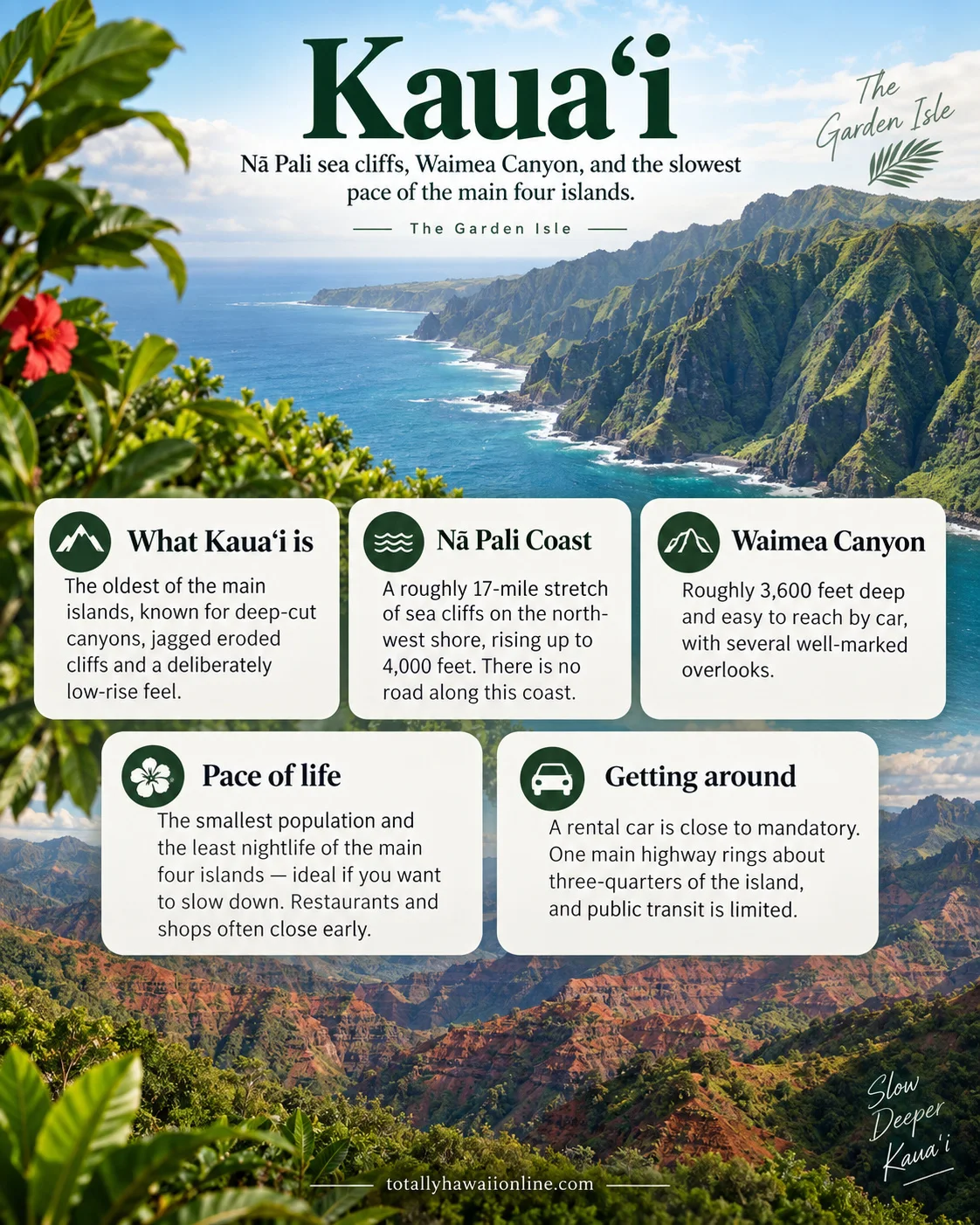
What Kauaʻi actually is
The oldest of the main islands, geologically — and it shows, in the deep-cut canyons and jagged, heavily eroded cliffs that give Kauaʻi its reputation as the most dramatically beautiful and the least developed of the four most-visited islands. Building height limits (nothing taller than a coconut tree) have kept it deliberately low-rise. See our island comparison guide for how it compares if you're still deciding.
Nā Pali Coast
A roughly 17-mile stretch of sea cliffs on the island's northwest shore, reaching up to 4,000 feet, accessible only by boat, kayak, small aircraft, or the demanding Kalalau Trail on foot. There is no road along this stretch of coastline — none of the main highway loops all the way around Kauaʻi, which is itself part of what's kept the area so undeveloped. See it by water in our kayaking guide, or from the air in our helicopter tours guide — Kauaʻi is widely considered the best island in the state for the latter.
Waimea Canyon
Nicknamed the "Grand Canyon of the Pacific" by Mark Twain, Waimea Canyon reaches roughly 3,600 feet deep and is easily reached by car, with several well-marked overlooks along Waimea Canyon Drive. Pair it with a stop at Kokeʻe State Park further up the road for cooler-weather hiking and views toward the Kalalau Valley, covered further in our hiking guide and our mountain biking guide.
Pace of life
Kauaʻi has the smallest population and the least nightlife of the main four islands — this is the island to pick if the goal is genuinely slowing down rather than keeping busy. Most restaurants and shops close relatively early; plan dinner reservations accordingly. Our Kauaʻi areas guide compares Poʻipū's reliable sun against Hanalei's dramatic North Shore scenery, and our Grand Hyatt Kauaʻi review covers the island's one large-scale resort.
Getting around
A single highway (Kaumualiʻi/Kūhiō Highway) essentially rings three-quarters of the island, stopping at Nā Pali on one end and Polihale on the other. A rental car is close to mandatory — public transit is limited; see our car rental guide.
Ready to plan the details?
Our sample Kauaʻi itinerary is deliberately the slowest-paced on the whole site — fewer stops, more room to actually slow down, matching the island itself.