

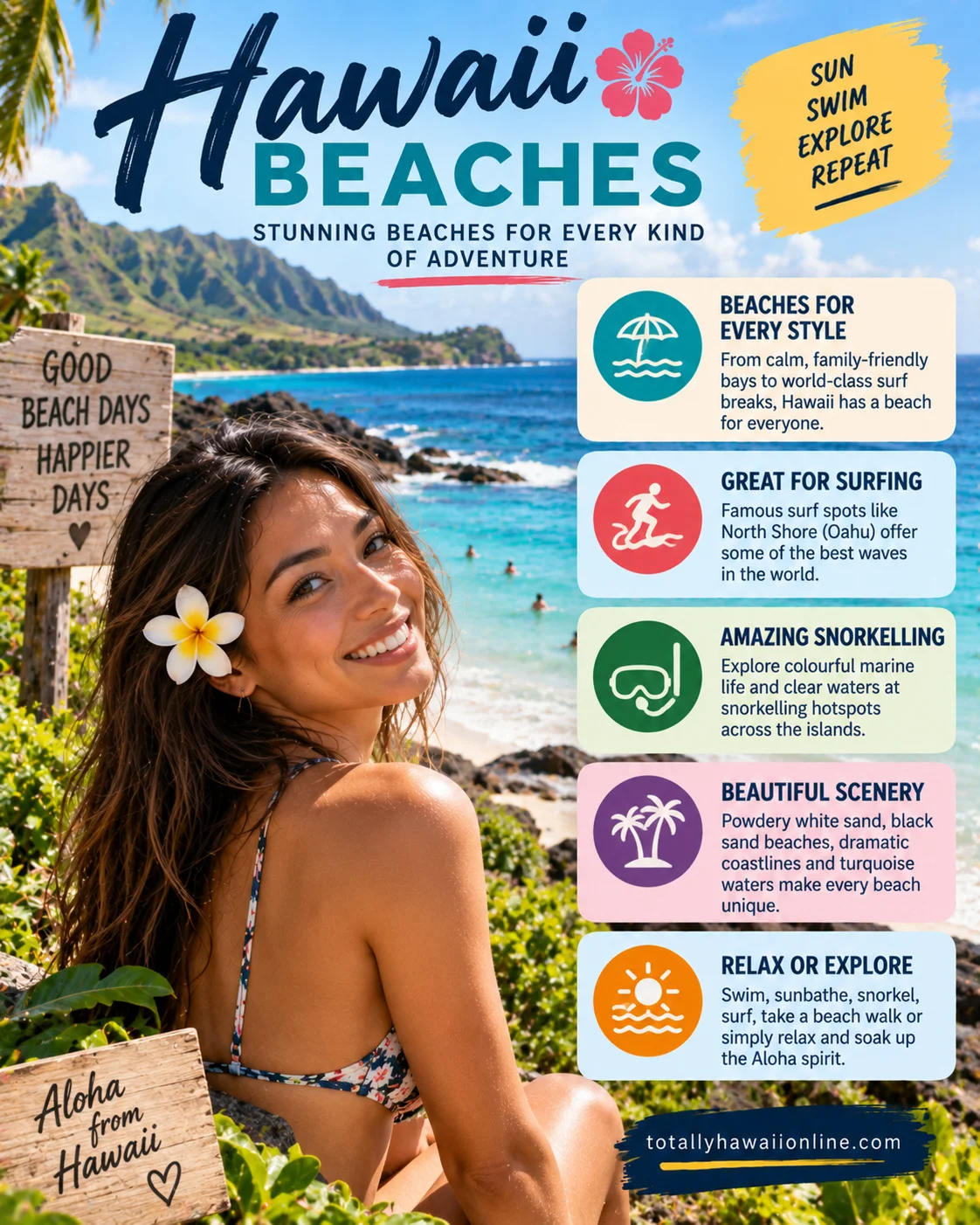
Choose beaches by conditions, not by a permanent “best” list
Hawaiʻi’s beaches are dynamic ocean environments. Swell direction, tide, wind and season can turn a friendly-looking swimming beach into a hazardous one within hours. Before entering the water, check current warnings, posted signs and lifeguard advice. The statewide beach-safety service explicitly warns that currents, waves and other hazards change rapidly and that published conditions never replace what you see on site.
Best bets for easier swimming
- Ko Olina Lagoons (Oʻahu) — man-made protected lagoons with sheltered water; still supervise children and follow posted rules.
- Poʻipū Beach Park (Kauaʻi) — reef protection can make parts of the beach gentler in suitable conditions, with a popular family setting.
- Kapalua Bay (Maui) — a curved bay that can be relatively sheltered, though swell and wind still matter.
No Hawaiʻi beach is guaranteed “safe”. If lifeguards or warning signs say conditions are hazardous, choose a different beach or stay out of the water.
Snorkelling from shore: pick the day as carefully as the beach
Hanauma Bay on Oʻahu is managed as a nature preserve with timed visitor entry and an online reservation system. City information currently shows visitor operations Wednesday through Sunday, with reservations released in advance; confirm the live booking rules and fees before travelling across the island. Kapalua Bay and other protected coves can offer easy shore access in calm weather, while Kealakekua Bay on Hawaiʻi Island is better treated as a conservation area where access method, permits and tour choices deserve planning.
North Shore winter: spectacular does not mean swimmable
Oʻahu’s North Shore can deliver enormous winter surf. Beaches such as Sunset, Waimea and the Pipeline area may be compelling places to watch experienced surfers from a safe position, but conditions can be completely inappropriate for casual swimming. Stay well back from the waterline during high surf, obey closures and never assume yesterday’s calm means today is safe.
Shorebreak, rip currents and rocks are the practical hazards
Many incidents happen close to shore. Powerful shorebreak can drive people into sand, while rip currents can pull swimmers away from the beach. Rocky entries and shallow reef add cuts and fall risk. Prefer lifeguarded beaches when possible, ask a lifeguard where to enter, and do not enter rough water to prove you are a strong pool swimmer.
Respect wildlife space
Green sea turtles and Hawaiian monk seals commonly rest or feed around beaches. Give wildlife room, never block its path to the ocean and follow current NOAA or posted minimum-distance guidance. If volunteers have marked a resting animal with cones or rope, treat that boundary as a minimum, not an invitation to crowd the edge for a photo.
For sunset, western exposure helps — but parking can shape the choice
West-facing coasts naturally give the broadest sunset views: Ko Olina on Oʻahu, the Kohala and Kona sides of Hawaiʻi Island, west Maui and Poʻipū on Kauaʻi are obvious candidates. At popular beaches, however, parking and the drive after dark matter as much as the horizon. Arrive early enough that you are not circling a full car park as the sun drops.
Black, green and remote beaches need extra planning
Unusual sand colour does not automatically make a beach a good swimming stop. Volcanic, remote and trail-access beaches can have difficult surf, little shade, no lifeguard and limited services. Treat them as landscape destinations unless current local conditions clearly support water activity.
A simple beach-selection routine
- Choose the activity: swimming, snorkelling, surfing, walking or sunset.
- Check that day’s swell, weather and beach warnings.
- Prefer lifeguarded water for family swimming when practical.
- Have a second beach in mind if conditions are poor.
- Keep wildlife distance and reef protection part of the plan, not an afterthought.