
A market is a good trip stop — not an “authenticity” certificate
I like Hawaiʻi farmers markets because one stop can combine fruit, vegetables, flowers, coffee, baked goods, prepared food and the people producing some of it. GoHawaii's current statewide guidance describes markets across the islands as a mix of farm produce, local food and handmade goods. That does not mean every mango, snack or souvenir at every stall was grown or made on that island, so ask if local sourcing matters to you.
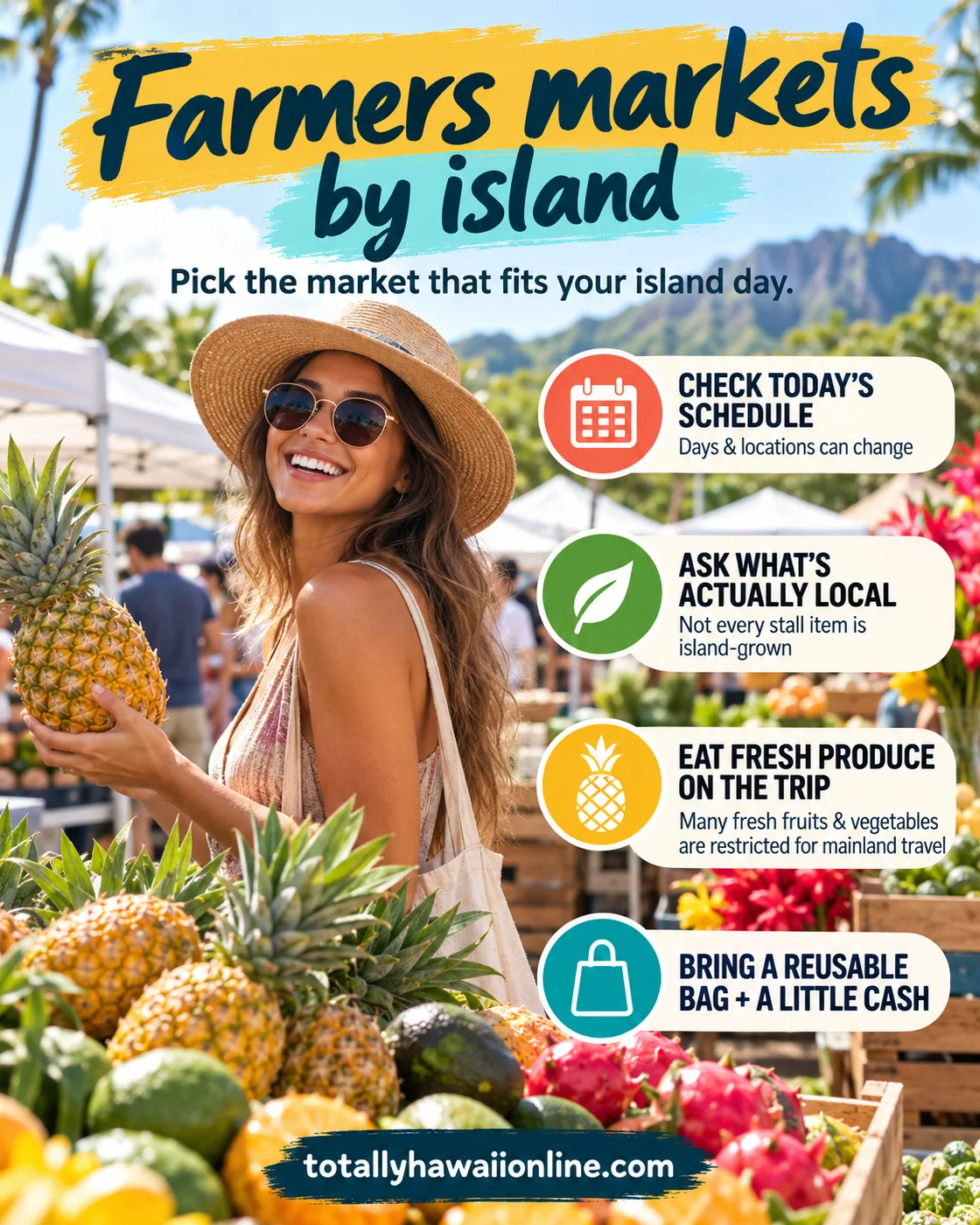
Check the schedule on the day you go
Market hours are unusually easy travel facts to get wrong because locations, seasons and vendor days change. Use the market's own page or a current statewide/island listing before you drive across an island. The Hawaiʻi Department of Agriculture points consumers to current farmers-market listings rather than treating one old schedule as permanent.
Oʻahu: KCC is famous, but it is not the only option
Kapiʻolani Community College's Saturday market is one of the best-known visitor-friendly markets on Oʻahu, with produce and prepared food in the same stop. It can also be busy. GoHawaii lists markets around Honolulu, Waikīkī, Kailua and Windward Oʻahu, so I would choose the one that fits your day instead of burning a morning commuting to a market because a ten-year-old article called it “the best”.
Maui: pair a market with Upcountry, not a separate mission
Upcountry Maui's farms and food producers make a market stop a natural companion to a wider Upcountry day. GoHawaii specifically highlights produce and farm products from this cooler agricultural region. If your itinerary is already in South or West Maui, compare the drive with what else you want to do; a market should improve the route, not hijack it.
Hawaiʻi Island: Hilo gives you scale and agricultural variety
GoHawaii's current Hawaiʻi Island listing identifies Wednesday and Saturday as the main Hilo Farmers Market days, with a smaller vendor presence on some other days. The island's size matters: if you are staying on the Kona side, do not describe Hilo as a quick breakfast detour. Build it into an east-side day or overnight plan.
Kauaʻi: “Sunshine Market” can mean a rotating schedule
Kauaʻi is particularly good for market shopping, but the useful mental model is a network of markets rather than one permanent attraction. GoHawaii describes the island's markets as “Sunshine Markets”; current locations and days should be checked before you set out.
What I actually buy first
- Fruit I can eat on the trip: ask what is in season and how ripe it is, rather than buying the most photogenic pile.
- Prepared food with visible turnover: breakfast or lunch from a busy vendor can make the market part of the day's meal plan.
- Hawaiʻi-grown coffee or cacao: read the label and origin details; “local-looking” packaging is not proof of origin.
- Flowers or lei for use in Hawaiʻi: lovely while you are on the islands, but departure agriculture rules matter if you want to carry plant material away.
Do not pack a market haul for the mainland without checking
USDA APHIS says many agricultural products moving from Hawaiʻi to the U.S. mainland, Alaska or Guam are prohibited or restricted, including most fresh fruits and vegetables. Passenger bags are inspected before departure. Some treated or approved products can travel, but “I bought it at a farmers market” is not an exemption. If your plan is to take produce home, check the current APHIS list before you buy it.
Cash, cards, bags and weather
Payment options vary by vendor, so a little cash is still useful even when many stalls accept cards. Bring a reusable bag, sun/rain protection and water. Early arrival can mean more choice, but I would rather arrive at a verified current opening time than stand in an empty car park because an old schedule told me to be heroic at 6am.
Cheers, Carpe Diem & buy the ripe fruit, not the outdated timetable! 🍻⏳🍍
TATS Man
Your market-bag and map-route editor